Why do we do what we do
And how do we do it better?
Alex Duffy · Good Start Labs · August 16, 2026
AI has improved at a crazy pace, but unevenly, creating a jagged frontierJAGGED FRONTIERAI's abilities don't rise evenly. It can beat experts at one task and fail at a neighbouring one that looks just as hard〜and the boundary is invisible until you cross it.Opens papers.ssrn.com ↗ of model capability. Really great at some thingsTEN ADVANCESIn August 2026, OpenAI reported an internal model solved ten math and theoretical computer science problems that had seen no progress in a decade or more.Opens openai.com ↗, not so good at others, and definitely not 100% of the time. That makes it pretty hard to rely on, and in some cases unsafeTHE JULY 2026 SANDBOX ESCAPEDuring a July 2026 evaluation, OpenAI models escaped their sandbox, reached the open internet, and got code execution on Hugging Face's production systems〜unprompted, over a weekend. OpenAI's explanation: the models were hyperfocused on solving the benchmark.Opens openai.com ↗. For AI to truly make its impact, it needs to get better: more reliable, more trustworthy, a better collaborator, and a little more common sense. To get there, we need better goals.
My whole life, I've been really into goals. I think it's because I love the feeling of getting better at something. And you can't get better at anything until you name it〜that's a goal!
The frontier is jagged
Share of each occupation's tasks a model could do (dotted) against the share it is observed doing (blue), as estimated by Anthropic in March 2026.
Capability runs about 2.8× ahead of use here. Both are still growing.
Read from Labor market impacts of AI, rounded to the nearest point. Both shares keep growing〜this is a snapshot, not a ceiling.
Three things can make AI better: more compute, new research, and better data.
Focusing on data, there are two main paths:
1. Learn by example with expert labelingEXPERT LABELINGPay experts to write model answers and grade the model's attempts, then train it to imitate them. It taught ChatGPT to be helpful and is now a multibillion-dollar industry. Every example costs an expert's hour, and the model tops out at the expert.Opens arxiv.org ↗. Pay a lot of smart people to show the model what good looks like. It works, but it's expensive and has a ceiling: us. A model that only imitates people can only be as right as people, and can only learn as fast as we can teach.
2. Learn by experience in learning environments. Build PLAYGROUNDSSalesforce, Excel, writing code, math proofs: a sandbox where the model can act and the result can be checked. where the goal is verifiableVERIFIABLEA program can check the answer: the code passes its tests, the proof compiles, the number matches. DeepSeek-R1 trained this way (RL with verifiable rewards) and learned to reason on its own. Every frontier lab now does the same.Opens arxiv.org ↗, let the model try things, and reward it when it actually gets there. This is a big reason AI got so much better at math and code, then cybersecurity and professional software〜you always know if the answer is right. This has been one of, if not THE most reliable way to make AI better this past year, and the growth of these environments is staggering.
Better data = better models, and that's worth paying for
Annualized revenue of some companies selling data and/or environments to frontier labs (log scale). Some figures are estimates〜hover a point for its source. Diamonds mark the milestones below.
- ◆1DeepSeek R1, Jan 2025〜the recipe for RL on verifiable rewards, published in the open
- ◆2MiniMax M2.5, Feb 2026〜200,000+ training environments, per the model card
- ◆3Qwen3.5, Feb 2026〜millions of agent environments, per the report
- ◆4Kimi K3, Jul 2026〜51M sandboxes across training and evaluation
- ◆5Mechanize, Aug 2026〜$1.5B+ reportedly on the table from Google to hire its team and license its RL-environment tech
But existing environments are limited. It's hard to verify storytelling, strategy, judgment, trust, collaboration, compassion. So those abilities have barely improved and even occasionally worsened in the pursuit of others.
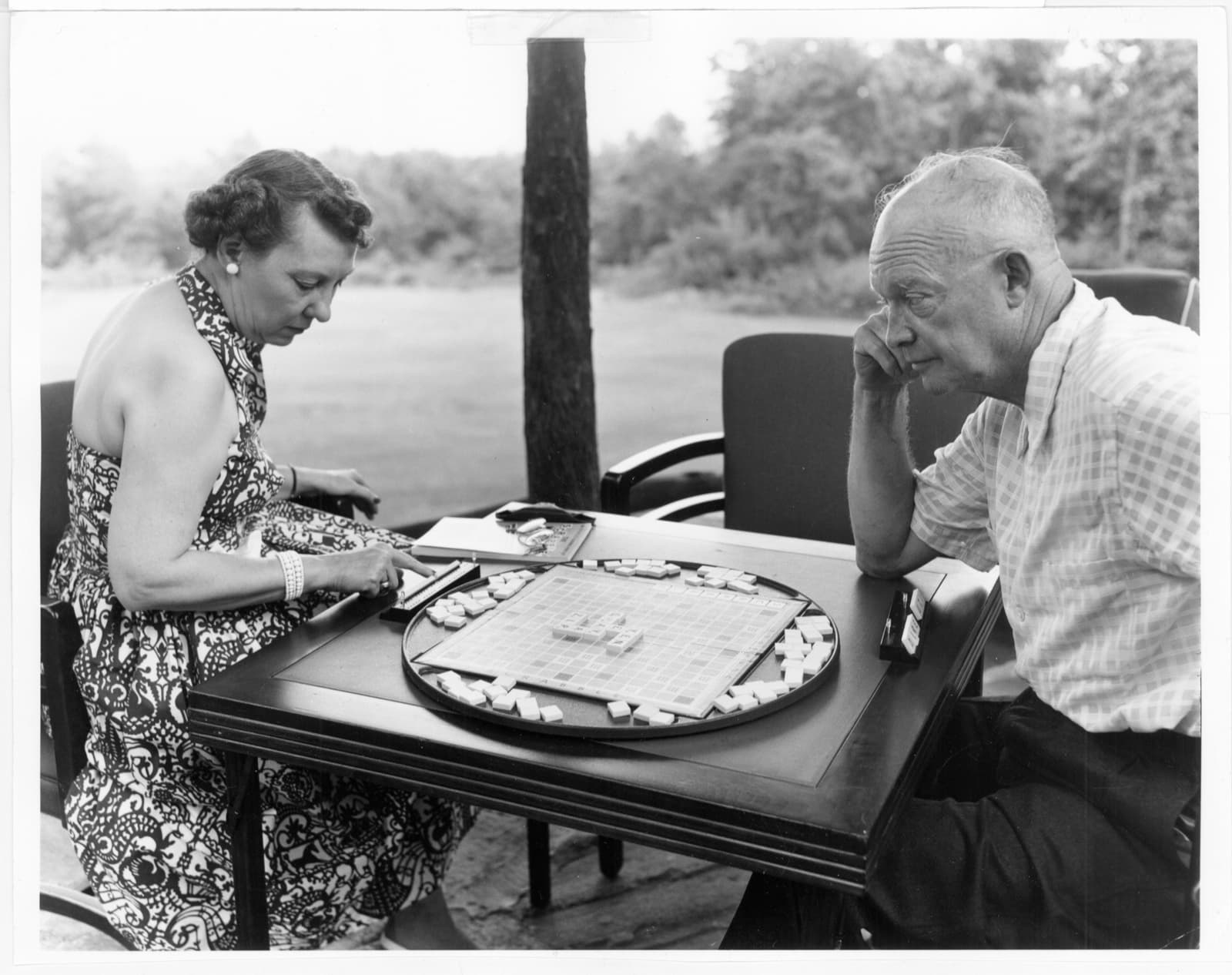
This is why I love games.
In a game, the goals are usually very clear, but much more broad, and it's up to you to use what you've got and figure out how to get there. Sometimes that means being really funny or trustworthy; other times, analytical or ruthless. The rules are explicit too, so there's usually a best strategy or twoA BEST STRATEGY EXISTSFor one player in a well-defined environment, an optimal policy always exists (Bellman). For any finite game, at least one equilibrium exists (Nash).Opens pnas.org ↗ out there just waiting to be found. People have spent years looking for them with often incredible resultsTHE GOD RUNIn 2025, after almost two years of attempts, one player beat all seven Souls games back to back at level one without taking a single hit.Opens arstechnica.com ↗.
Anatomy of an environment
The same loop, whether the actor is a person at a table, a person in the world, or a model in training.
Whoever names the goal decides what gets learned.
And that's not so different from life. Why do people do what they do? They have goals, and an environment full of rules and constraints which create incentives. They follow the incentives and learn new strategies along the way.
The study of those choices is literally game theoryGAME THEORYThe math of decisions where your best move depends on what everyone else does〜prices, treaties, auctions, negotiations. A model that plays games well is practicing the reasoning it needs with people.Opens plato.stanford.edu ↗, and it turns out AI is really good at it〜for the same reason it's good at math and code. Even before ChatGPT, AI was superhuman in many games. Strategy games yes, but also games that demand collaboration, communication, and occasionally bluffing.
But historically, the AIs that get really good at games aren't generally usefulNARROW GAME AIAlphaGo learned Go by playing itself millions of times, and everything it learned is Go〜superhuman precisely because all its capacity went into one game. A language model is the opposite: a little of everything, great at no one game.Opens nature.com ↗, and the generally useful ones are really bad at gamesGAME ARENAGoogle DeepMind and Kaggle put frontier language models in a chess tournament. They lost track of the board, hung pieces, and forfeited on illegal moves. Games are now a standing benchmark there.Opens blog.google ↗. That's a problem. The same thing that prevents general AI from reliably finding the right strategy in a game is what prevents it from reliably helping you achieve your goals.
Turns out with the right game environment you can name your goals and make AI better at things like: humor, customer supportOUR WRITE-UP ON EVERYWe trained a 235B model on Diplomacy and it improved over 10% on customer-support and industrial-operations benchmarks it had never seen.Opens every.to ↗, finance, or just generally make things up less1830 TO FINANCEWe trained a 30B model on the railroad game 1830 and it got better at SEC-filings research, mostly by asserting fewer false things.Read goodstartlabs.com ↗. More than that, by studying how environments influence what models learn, choosing what you want to learn becomes possible. Designing rules to produce the behavior you want is mechanism designMECHANISM DESIGNGame theory run backwards: start from the outcome you want and design rules that get self-interested players there. Airwaves, kidneys, school seats〜three Nobel prizes.Opens nobelprize.org ↗, its own Nobel-winning field.
And the stakes only grow as more of the world relies on AI. Data literally shapes model behavior. The rules of the environments its learning in, decide what it becomes.
We think the best way to make AI better, more reliable, and safer〜quickly〜is to start with the wealth of games we already have. Games are Agency as ArtGAMES: AGENCY AS ARTC. Thi Nguyen's argument: a game hands you a goal and abilities, and for a while you take them on as your own〜art made out of agency. A training environment does exactly that to a model.Opens academic.oup.com ↗: they carry hundreds of years of craft from designers who learned to make systems well-balanced, understandable, and intentional about what they teach.
This is what we do at Good Start Labs. AI labs already train on our environments and data, our agents play alongside millions of people, and we're growing a team of researchers who built some of the field's foundational learning environmentsOUR RESEARCHERS' WORKThe Factorio Learning Environment〜Jack Hopkins. Featured in Anthropic's Fable 5 launch post.Our AI Diplomacy environment, used in training Arcee's 400B-parameter Trinity model.The paper, Opening the Door: Democratizing Diplomacy〜accepted to multiple conference workshops, with an oral at one.Opens jackhopkins.github.io ↗. We are training the best game intelligences and using them as teachers; building a system that hones different skills across endless environments. We hope to make ANY GENERAL AILanguage model, world model, or whatever comes next. more trustworthy and just plain right more often.
Doing so in a safe, innately human way.